

Télésculpture
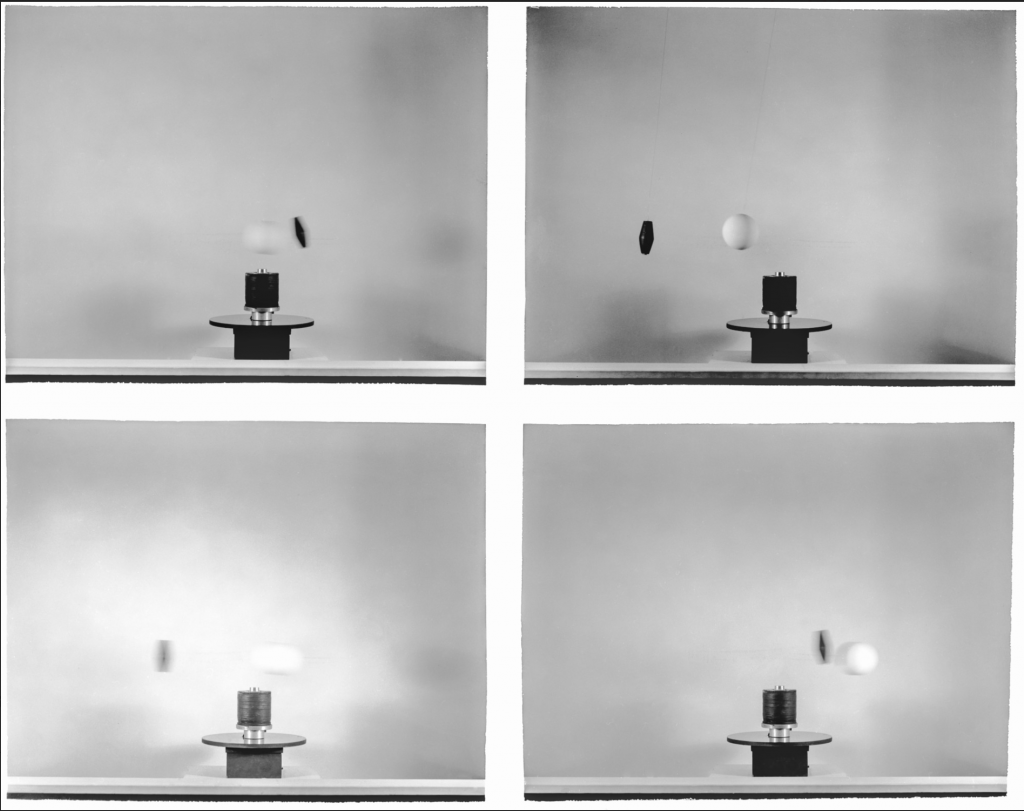
Télésculpture, 1960, cork added 1962, Collection of Museum of Modern Art, NY. Takis made a number of different works that went by the name Télésculpture in the 1960s and 1970s. This particular kinetic sculpture was the object of considerable controversy. During a landmark exhibition of art and technology, The Machine as Seen at the End […]
CYSP I

This is a STUB article please make edits and adjustments as suggested on Wikipedia to make it more robust. Thanks! Nicolas Schoffer The artwork is a cybernetics and space dynamics construction. Its movement is completely autonomous. It has an electronic brain, developed by SA Philips. The 16 polychrome composing plates, driven by small motors, […]
A Collection of Circles (or Pharology)

STUB article : please add more information A Collection of Circles (or Pharology) Yolande Harris “Over the last months, I have been collecting sounds and video images related to the circular movements of a lighthouse loom. What Virginia Woolf called the “winking eye” has provided me with a form […]
Model for Kinetic Light Sculpture

This is a STUB article please make edits and adjustments as suggested on Wikipedia to make it more robust. Thanks! See more of his work on Art and Electronic Media Online : http://www.artelectronicmedia.com/artwork/torsos-of-men-and-women Pešánek was using neon light and creating imaginative kinetic and light sculptures at the time. The optimism of the Czechoslovak […]
Light Prop

This is a STUB article please make edits and adjustments as suggested on Wikipedia to make it more robust. Thanks! Also called Light Prop for an Electric Stage, this kinetic sculpture that László Moholy-Nagy designed and photographed was intended to create light displays for theater, dance, or other performance spaces. With its gleaming glass and […]
Rotary Glass Plates
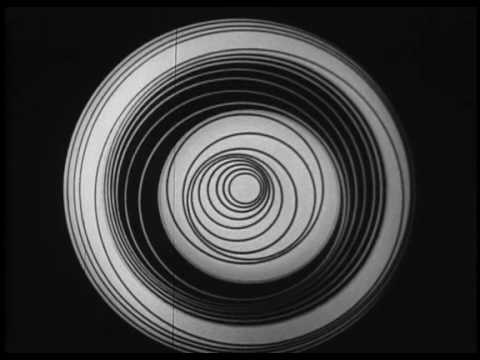
This is a STUB article please make edits and adjustments as suggested on Wikipedia to make it more robust. Thanks! In January 1920, Duchamp made (again) an optical experiment with the assistance of Man Ray. Making us of the fact that the eye retains an image for a fraction of a […]
Well of Lights
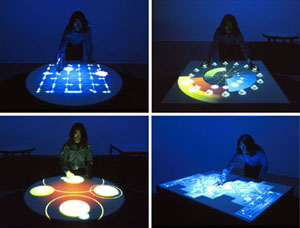
This article is a STUB please make edits and adjustments as suggested on Wikipedia to make it more robust. Thanks! Toshio Iwai is a Japanese interactive media and installation artist who has also created a number of commercial video games. In addition he has worked in television, music performance, museum design and digital musical […]
Participation TV

Participation TV is another interactive-participatory piece created by video artist Nam June Paik (1932-2006) in 1969. The piece lets the participant control the visuals on the TV screen through speaking or making sounds through a microphone, so as they are making noise they are able to see the line and formations made on the screen instantaneously. […]
The Giver of Names
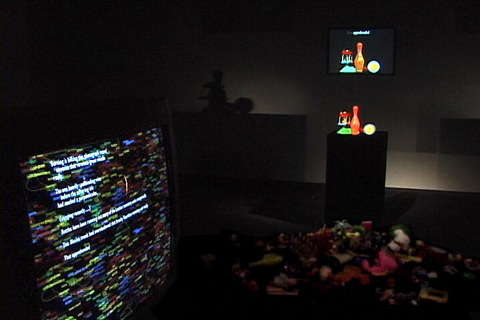
David Rokeby’s ongoing work The Giver of Names, found on page 79 of Art and Electronic Media, examines our language and the subconscious associations our brain makes when identifying an object. The computer captures an image of an object that has been placed on a pedestal in the gallery space by a visitor. The computer then […]
Every Icon John F. Simon

Every Icon, created by John F. Simon Jr. in 1997 incorporates duration in a way that, while “resolved conceptually, it is unresolvable in practice” [2]. Every Icon is a “personalized Java applet, available for purchase from Amazon.com for $20” that consists of a 32 x 32 grid of varying black and white elements [1]. The grid’s […]
Present Continuous Past(s)
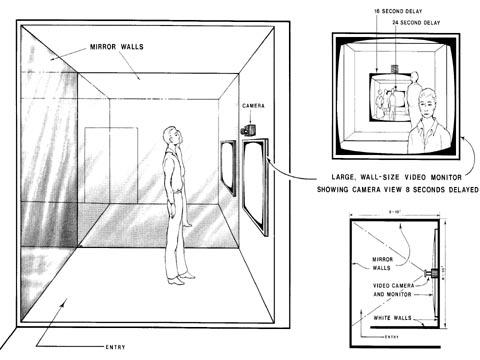
Present Continuous Past(s) is a piece where present time is reflected. This piece was created by a diverse artist named Dan Graham. 1 “Graham was owner of a gallery, art and culture theorist, photographer, film producer, performance and installation artist. A pioneer in performance and video art in the 1970’s, Graham later turned his attention […]
“Electrum” by Eric Orr

When most people think of electricity, they simply see it as a way to power everything. Some people also see it as as dangerous and almost uncontrollable in its raw form outside of conductors or wiring. Artist, Eric Orr, used technology previously invented by scientist Nikola Tesla. Nikola introduced the Tesla reactor to explore electricity […]
“Wooden Mirror” by Daniel Rozin

Daniel Rozin has produced several artworks that function as mirrors but use materials that are seemingly non-reflective.: trash, cork, metal, and paper. Arguably his most awe-inspiring piece is the Wooden Mirror. When asked to describe this piece, Rozin replied, "Built in 1999, this is the first mechanical mirror I built. This piece explores the line […]
“The Mandelbrot Set” Benoit Mandelbrot
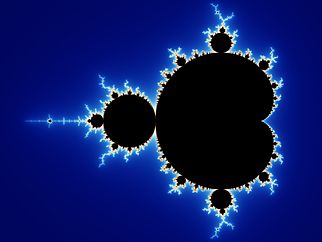
The Mandelbrot Set by Benoit Mandelbrot is a fractal that employs the simple equation “z = z *z + c”. This equation basically controls a feedback loop. “The equation is calculated dozens, or even millions of times for each pixel. Each time through the loop, the result of one calculation is used as the input […]
“The Monument to the Third International” by Vladimir Tatlin
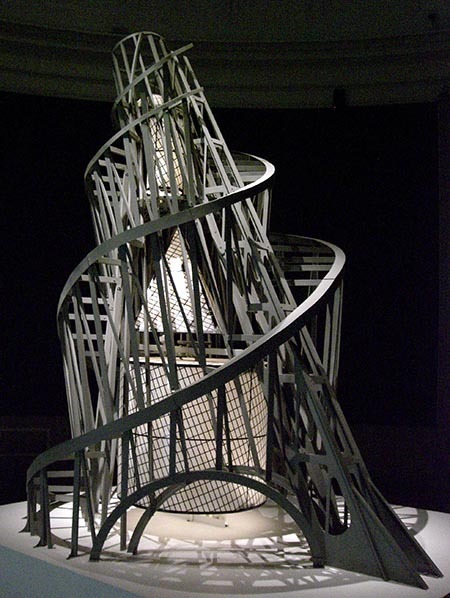
During 1919 and some of 1920, russian architecht, Vladimir Tatlin, produced many sketches of a tower that would be The Monument to the Third International. “This utopian design, so typical for the frenzied mood of Russians in the years immediately following the Bolshevik revolution was, in theory, to have been taller than that great symbol […]
Payphone, Robert Lazzarini
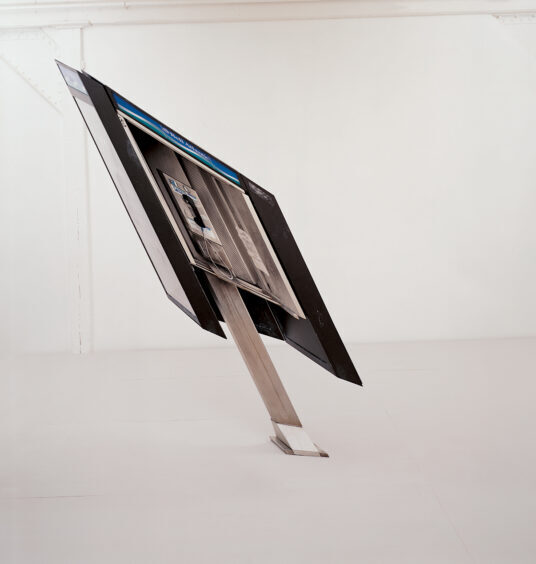
payphone is made from the exact materials a New York City pay phone was made out of: Steel, aluminum, Plexi, gunk, materials and processes requiring 45 fabricators. The work’s distortion gives it a futuristic feel — even as pay phones are increasingly out-of-date.” [3] “His beautiful yet unsettling works address the physical, psychological and […]
aftersherrielevine.com
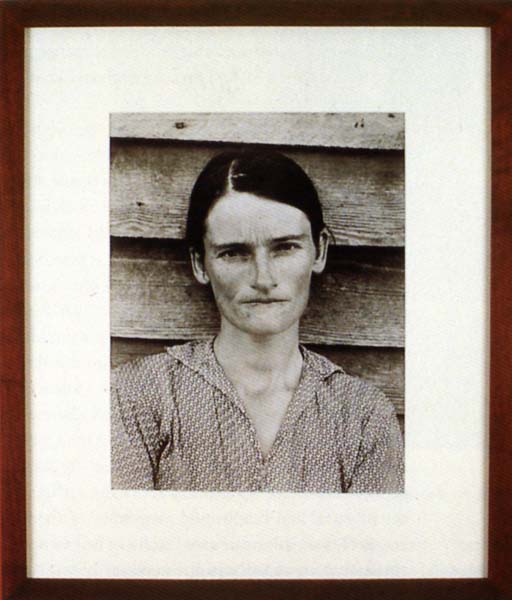
One of the double-sworded attributes of the digital era is the ease in reproduction of art. The reproduction of an image in order to publicize it to mass media for communication purposes or in order to add to the overall message of the work are two examples of the good side of the sword. The […]
Tribute in Light

“More recently, light has been used as an artistic medium to illuminate a metaphorical passage between the earth and the heavens.” [1] Tribute in Light is not only beautiful aesthetically, but also beautiful in content as it paid a tribute to the victims of 9/11. The NY Daily News describes the work: “The […]
Rearming the Spineless Opuntia

Amy Youngs offers a critique of the way we treat our natural resources with her piece Rearming the Spineless Opuntia found on page 39 in Art and Electronic Media [2]. In this piece, while critiquing the careless genetic alteration of the naturally occuring environment, she attempts to create a solution for it as well. She says […]
“Fly” by rAndom International

[video src=http://vimeo.com/31013833 width:400 align:right] According to its creators, the art/design collective rAndom International, “Fly studies the movement of objects and insects within a confined space. An abstract representation of a fly is held captive inside a glass box, centrally ensnared by eight cables. The behaviour of this ‘fly’ is controlled by a unique and autonomous algorithm, accurately simultating the observed behaviour of real flies.The ‘fly’ has the freedom to move anywhere within its box, but lacks spatial reference.”
The Invisible Shape of Things Past
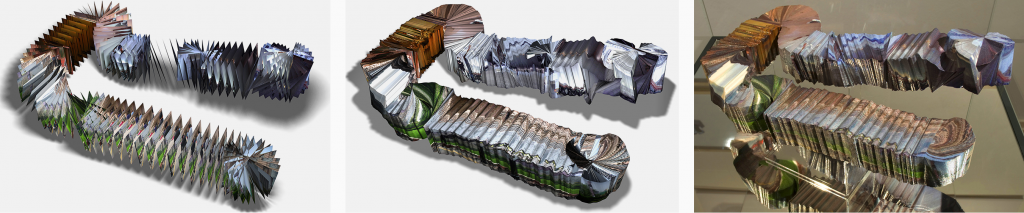
After reading chapter two of Manovich’s Software Takes Command, the difference between multimedia and hybrid media revealed various facets within themselves that I never even knew existed. It struck interest in many ways, but one most of all which was the further study into Joachim Sauter’s Invisible Shape of Things Past. Honestly, at first it […]
Heart Beats Dust

Jean Dupuy really begins to take advantage of and enhance our perception of the world around us. Dupuy does this by transducing one sense into another, allowing the viewer to experience that sense in a different way than ever before. For example, the work Heart Beats Dust, exhibited in "The Machine" in 1968, takes an organic process […]
30 Days of Running in Place

 Ahmed Basiony‘s 30 Days of Running in Place was first presented at the Why Not exhibition in Cairo in 2010. Basiony performed daily for 30 days in a room enclosed in transparent plastic outside the Cairo Opera House and Palace of Arts – The artist jogged around the room wearing a plastic suit fitted with digital sensors that gathered and wirelessly transmitted data on his movements and physiological parameters – This information was in turn processed and projected on a large screen as an ever-changing visual and aesthetic reflection of the artist’s physical state. As a five-channel installation exhibited at Egyptian Pavilion at the Venice Biennale 2011, 30 Days was juxtaposed with videos recorded by Basiony during his participation in the January revolution, until he was killed by gunshot wounds inflicted by Egyptian Police snipers on January 28, 2011.
Polygon Playground
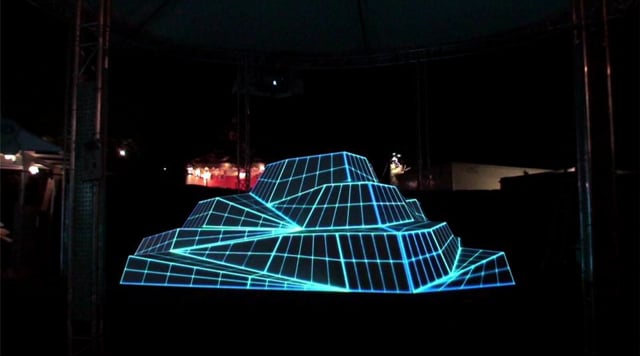
[video src=http://vimeo.com/35134962 height:200 align: left]Polygon Playground is a ‘dynamic lounge object,’ incorporating 3D projection technologies and sensors to detect movement and proximity of people in the room. The physical structure is such that up to 40 people may climb, rest, or walk around it, while sensors cause the ‘landscape’ to continuously change as as long as there is human presence. Often the imagery responds to movements, so running across the top of the structure may cause it to highlight the participants footsteps. Other motifs include grids, filling with water, orbs or color that can be ‘kicked’ around, and various abstract color forms.
Outerspace
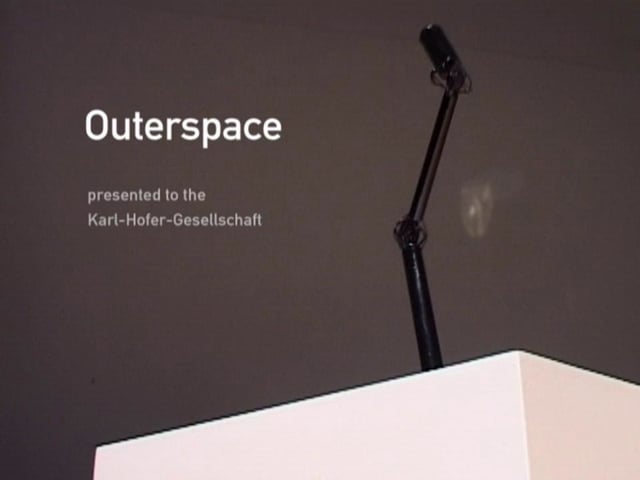
 Outerspace is a reactive robotic creature with lifelike interactive behaviour. The robot wants to explore the world surrounding him, or the outer space, exhibiting curiosity and waryness as an aprehensive animal might. A participant may put a hand up to the robot and cause it to pull away, as if surprised at the recognition of another being, then move forward searching for the thing that caught it’s attention. The concept that insprired the work was that an object, inherently not living, cannot have emotion. In order to create an emotional object (the goal), first the thing must be aroused, feel, have a emotion; then comes emotional expression. In technical terms, it must read input and display output.
Mappings
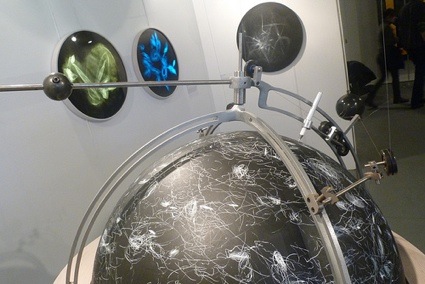
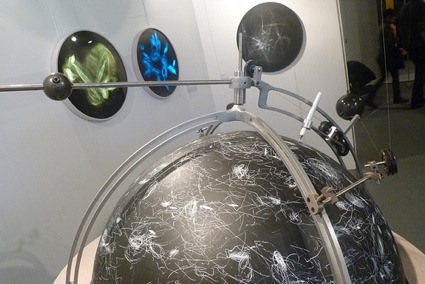 Balint Bolygo’s Mappings is a 2005 kinetic sculpture which utilizes the core aspects of the Bolygo’s ethos as an artist. In the sculpture/installation two pens rigged to outlying pendulums transcribe the motions taken by the pendulums onto a rotating sphere, or blank globe. Viewers can interact with the pendulums, pushing them to behave more erratically, or calming them to induce smoother lines. The resulting process essentially becomes the earth mapping its own forces onto a replica of itself, a truly interesting portrayal of mapmaking that encourages the viewer to consider the mass our planet, whose gravitational pull directs the motion of the pendulum and creates the drawings.
Trace
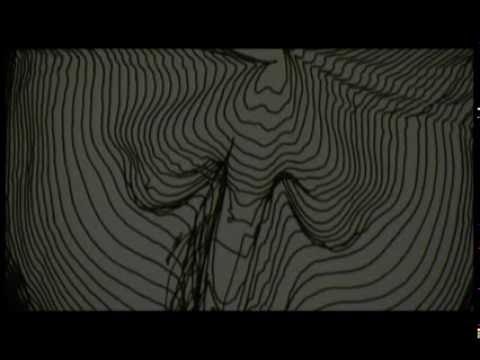
[video src=http://www.youtube.com/watch?v=J3XWQzz_JWs align: left height: 200]Bolygo’s take on the self portrait, Trace, is a 2008 sculptural device by the artist, which connects conventional ideas of sculpture, especially of the human form, to contemporary notions of topography and transcription. The piece involves a rotating cast of the artist's head traversed by an extension of a complex but completely mechanical device, which records depth onto a circular piece of paper rotating at the same rate as the head. The artist's own head is then transformed into a compelling topographical map of itself under rotation. The resulting image is noticeably a head, but a heavily distorted one, appearing almost like an image from a spirograph, an evolving concentric diagram of recorded depth.
Given Time

[video src= http://youtu.be/deub5AMgblk? time:15s height: 220 align: right] In Given Time, artist Nathaniel Stern utilizes different forms of media, but maintains his focus on the relationship between bodies and art. This this video installation, Stern created two avatars in Second Life who stand apart facing one another. Their location within the in-game world is never disclosed, but they do occupy virtual space somewhere. In physical space, the two avatars are projected onto screens opposite one another in the gallery, as in Second Life. Viewers can approach the two virtual performers, while they hover as video projections, forever staring at one another. These representational characters are in fact, nobody. They exist only in the virtual plane, yet they are brought into existence via light and electricity.
Compressionism
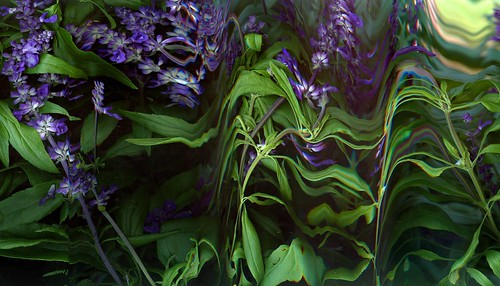
 Part photography, part performance art filtered through an algorithmic structure, Nathaniel Stern's Compressionism uses a document scanner as the tool of choice, which takes on the dual roles of paintbrush and camera: as the scanner bulb moves along its path, the artist follows his own path hovering over various objects and textures. Sometimes linearly, sometimes erratically, he moves according to his own performative instincts. With this kinetic approach, Stern bridges a certain gap between his body and the end result.
Alma da Agua: A Fluid Water and Space Initiative

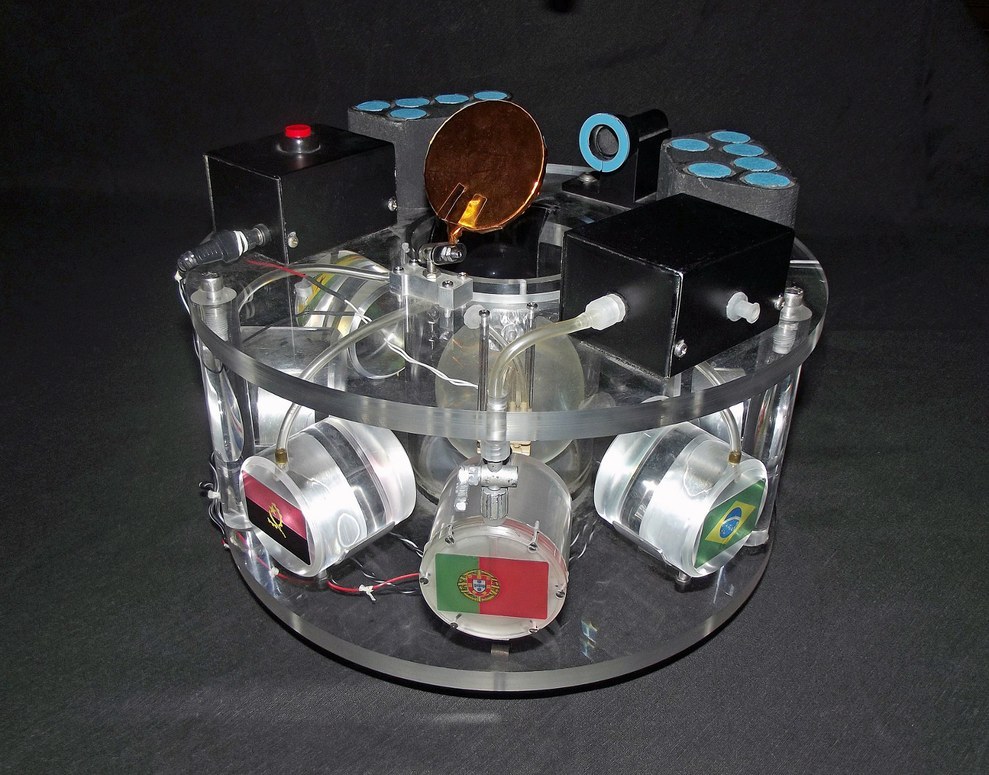 Alma da Agua (Water of the Soul) seeks to re-connect all Portuguese speaking contries. Taking water samples from the eight countries (Portugal, Brazil, Angola, Mozambique, Cape Verde, Guine-Bissau, Sao Tome e Principe, and East Timor), Artists Richard Clar and Dinis Afonso Ribeiro intend to send the water samples into space inside a liquid mixing apparatus (shown above). The idea is to expose the water to low-gravity and mix the waters in a symbolic way and in a neutral environment.
Long March: Restart
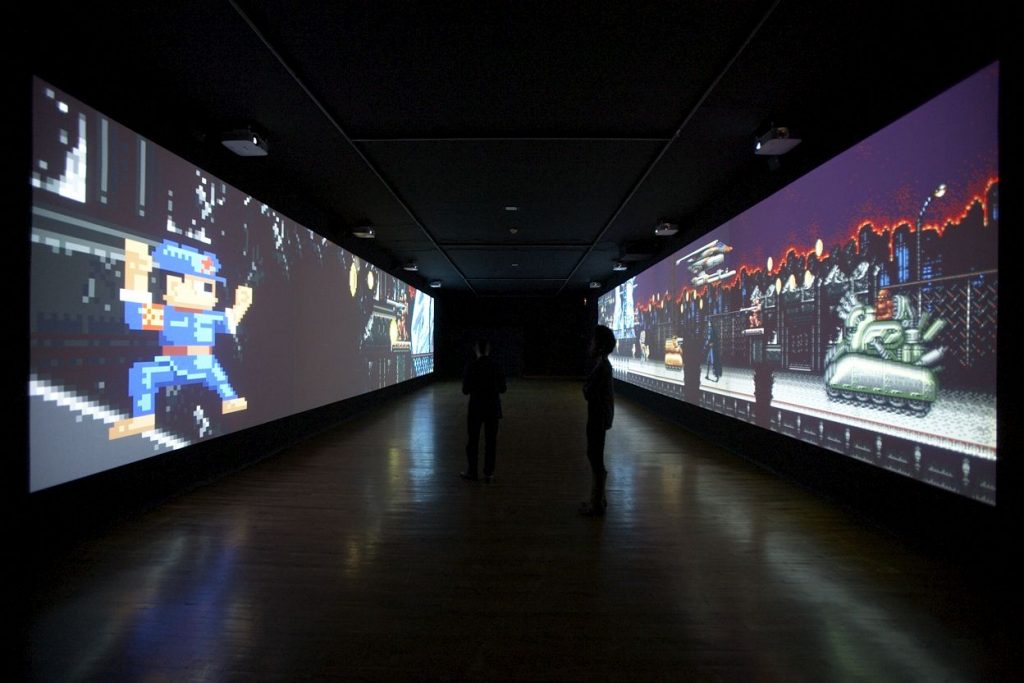
 In 1993, Feng Mengbo created a series of paintings he titled Game Over: The Long March. Painted in the style of 8-bit video games like Mario and Mega Man, the paintings depicted 42 scenes, arranged in order to look like snapshots from a real side scrolling video game. Feng’s protagonist was a nameless Red Army soldier, depicted battling everything from ghosts and giant insects, to sumo wrestlers and astronauts.
AH_Q
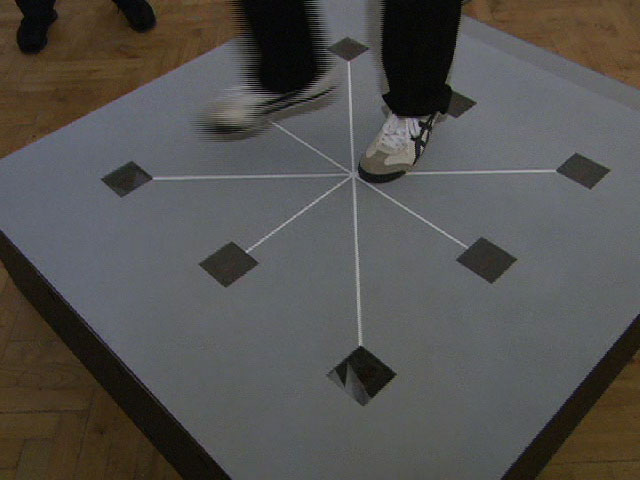
 Chinese new media artist Feng Mengbo has worked with iconic first person shooters Doom and Quake throughout his career. In Q3 (1999) Feng recorded footage of the game Quake III Arena and superimposed live action video of himself, toting a camera around the battlefield and interviewing contestants, over top. Feng expanded upon this idea in 2002's Q4U (a play on the common abbreviation for the game, Q3A) by completely reworking the game's code to replace all character models with a model of himself, bespecktacled and shirtless, with a gun in one hand and a video camera in the other. Feng's AH-Q, released in 2004 and pictured here, saw the addition of a dance pad used to control all the player character's motions.
The following video, produced by the Creator's Project, includes examples of Feng Mengbo's work and an interview with the artist.
[video src= http://thecreatorsproject.vice.com/creators/feng-mengbo]_][s][hut][ters][ of d.funct meat_//Shutters of Defunct Meat
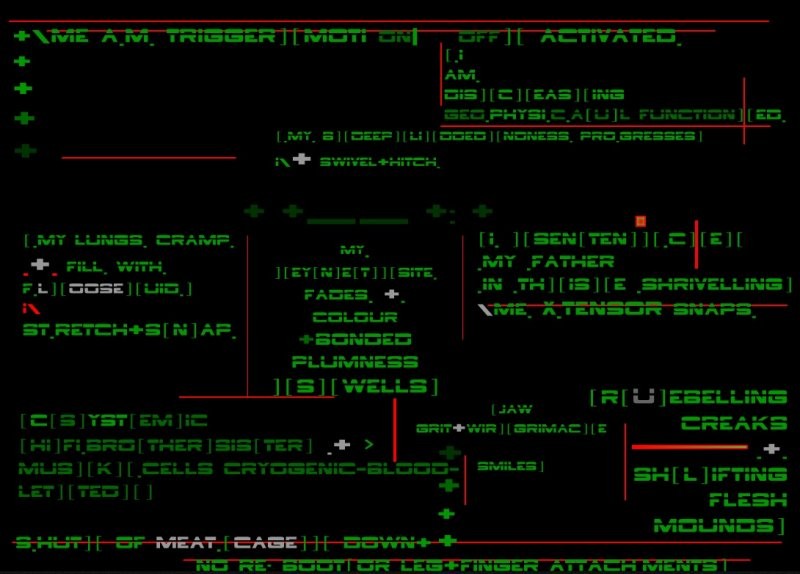
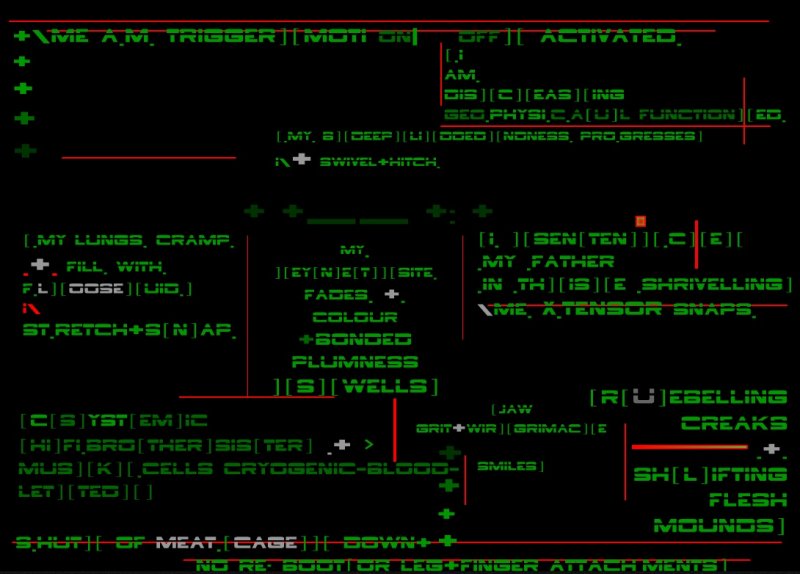
_][s][hut][ters][ of d.funct meat_//Shutters of Defunct Meat
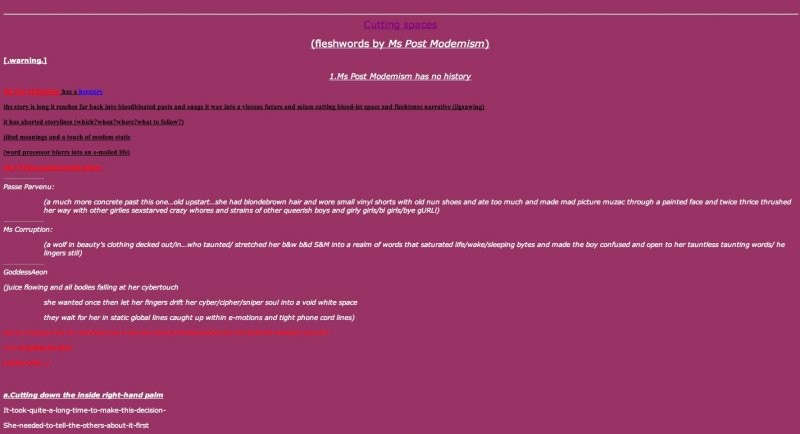
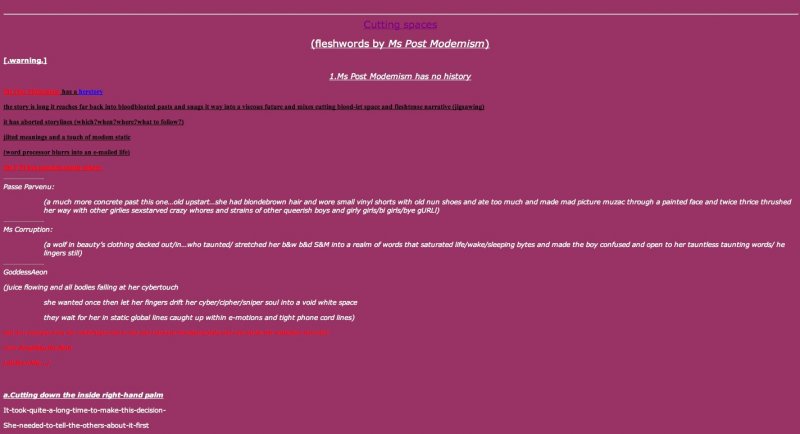
Cutting Spaces
Emerge

[video src= http://www.youtube.com/watch?v=huvVO18c8Hw align: right height: 220] Emerge relies heavily on viewer interactivity. It features childish cartoon figures that are projected onto a wall. Visitors control the movement of the figures and change them through these interactions. The figures in this piece can be seen as fables about our own daily struggles and activities as they move, expand, and escape. In Emerge each character is inside of an individual chamber and this examines, in a humorous way, the illusions that drive us and the small worlds we confine ourselves to. They cover all available surfaces, reacting to viewer’s intrusions into their small worlds. Emerge is part of artist Brian Knep’s Exempla series and is the first item in the adjacent video.
Healing Pool
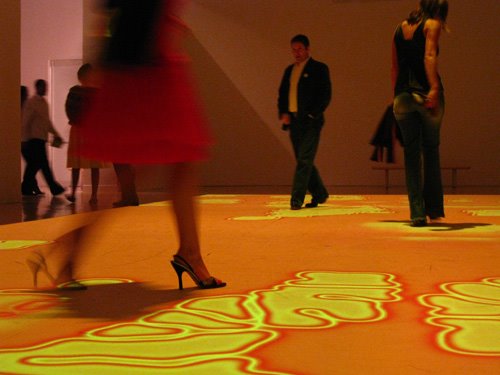
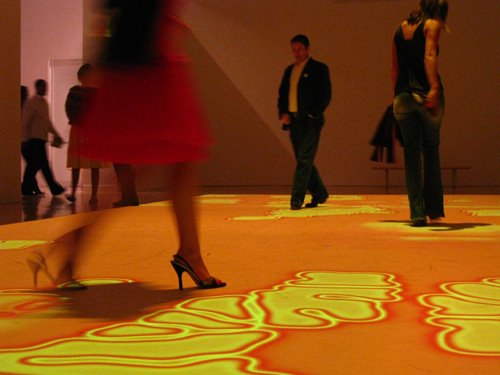
The Healing Pool by Brian Knep is a six channel interactive video that was installed in 2008. A glowing pool of organic patterns move and pulse. As a person walks across the video the pattern tears and then continues to rebuild itself. However, the pattern never returns to its original form. Each person who walks across this work leaves a scar. The regenerative piece holds a record or a memory of every interaction it has as it constantly evolves. This work is part of Knep’s healing series and this work investigates artificial intelligence and artificial life. Of this work Knep says, “with these pieces I am focusing on the complexity possible with very simple rules. The patterns and their growth are completely emergent phenomena; they arise from the mathematical equations that the software simulates.”
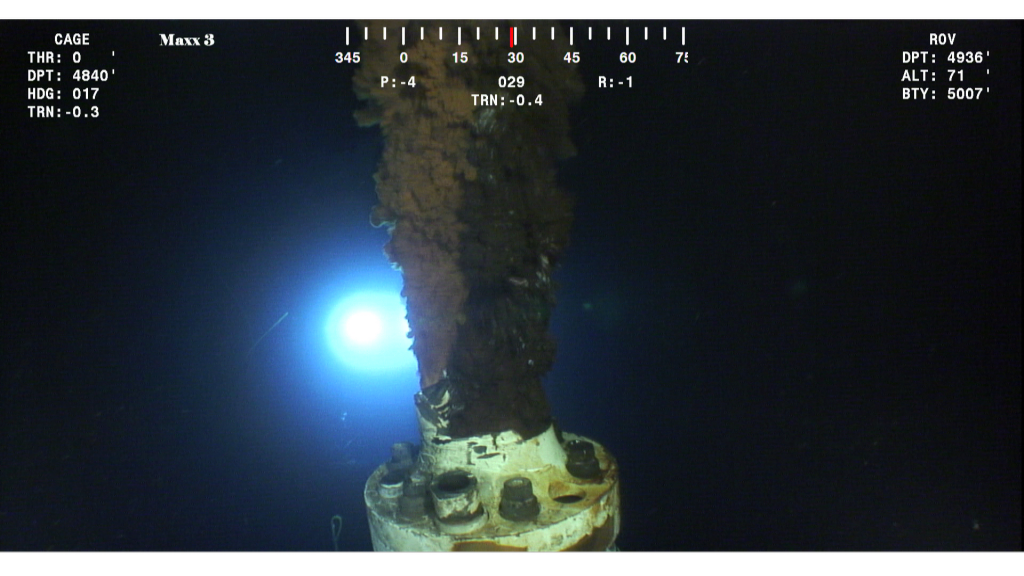
Sweet Crude


Funky Forest


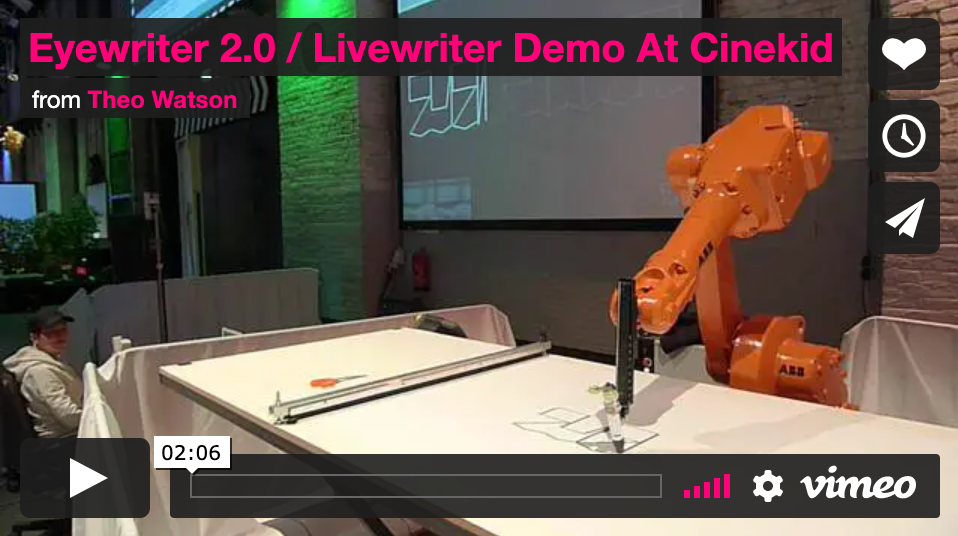
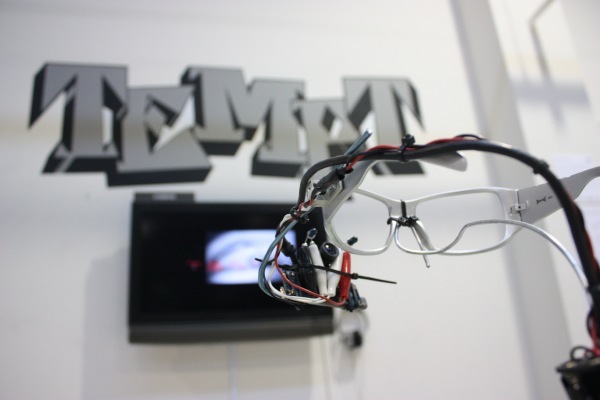
EyeWriter
 [video src=https://vimeo.com/6376466]

Despondency Index